

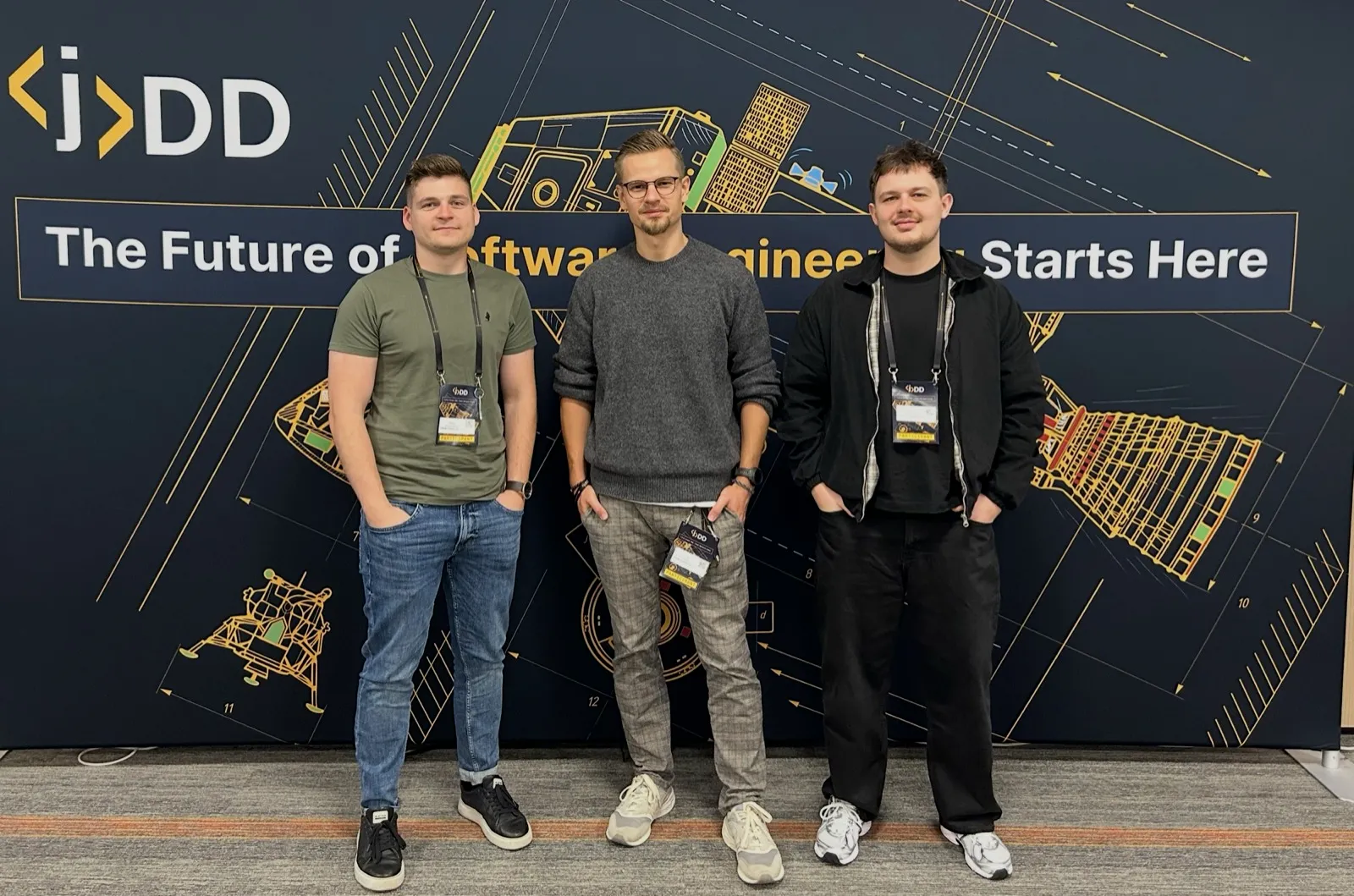
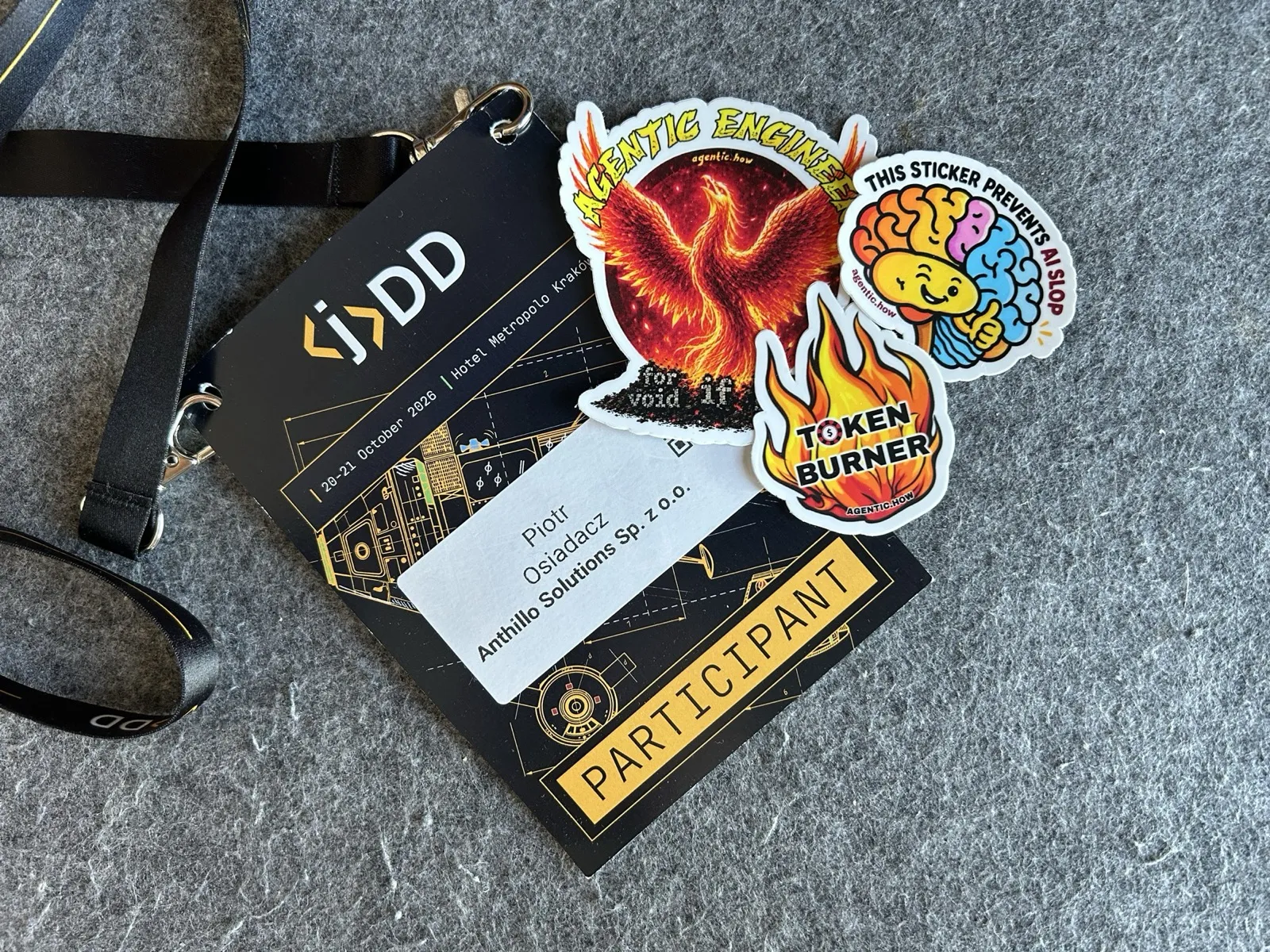
One of the nicer things about being part of the JVM family is the chance to attend events that bring together Java enthusiasts who want to share their knowledge and experience. Locally, these are the so-called JUGs (Java User Groups), and a few times a year bigger conferences take place in different parts of Poland. This time we went to JDD, held in Kraków on 20–21 October 2026 at the Metropolo hotel.
JDD, what’s that?
JDD, short for Java Developers’ Day, is a Java conference in Kraków that has been running since 2006. This year was already its 20th edition. Today it is organised by PROIDEA, and the event lasts two days, with several parallel tracks and speakers from Poland and abroad. It is one of Poland’s biggest gatherings of garbage collector fans in one place.
Not just AI
This year the JDD talks were split into 8 tracks (4 each day):
- Core: Java and the JVM from the inside: the language, the runtime, performance and concurrency.
- Architecture: system design, microservices, event-driven and cloud-native architecture.
- Reliability: reliability in production: observability, fault tolerance and security.
- JUGmajster: the community track, with talks from people in Polish JUGs.
- AI Engineering: practical use of AI in Java: LLMs in the backend, agents and AI in a developer’s daily work.
- Engineering Reality: stories from production and from projects that didn’t go to plan, without the marketing.
- Soft Skills: teamwork, communication, careers and technical leadership.
- Unconference: an open format where attendees propose the topics and lead the discussions themselves.
So as you can see, AI hasn’t taken over the JVM world yet, and you can still learn plenty of interesting things about clean code, architecture, best practices and so on.
Best talks
There were plenty of great talks at this year’s JDD, but two of them stood out for me.
🏆 Code Review in Agentic Engineering – Victor Rentea
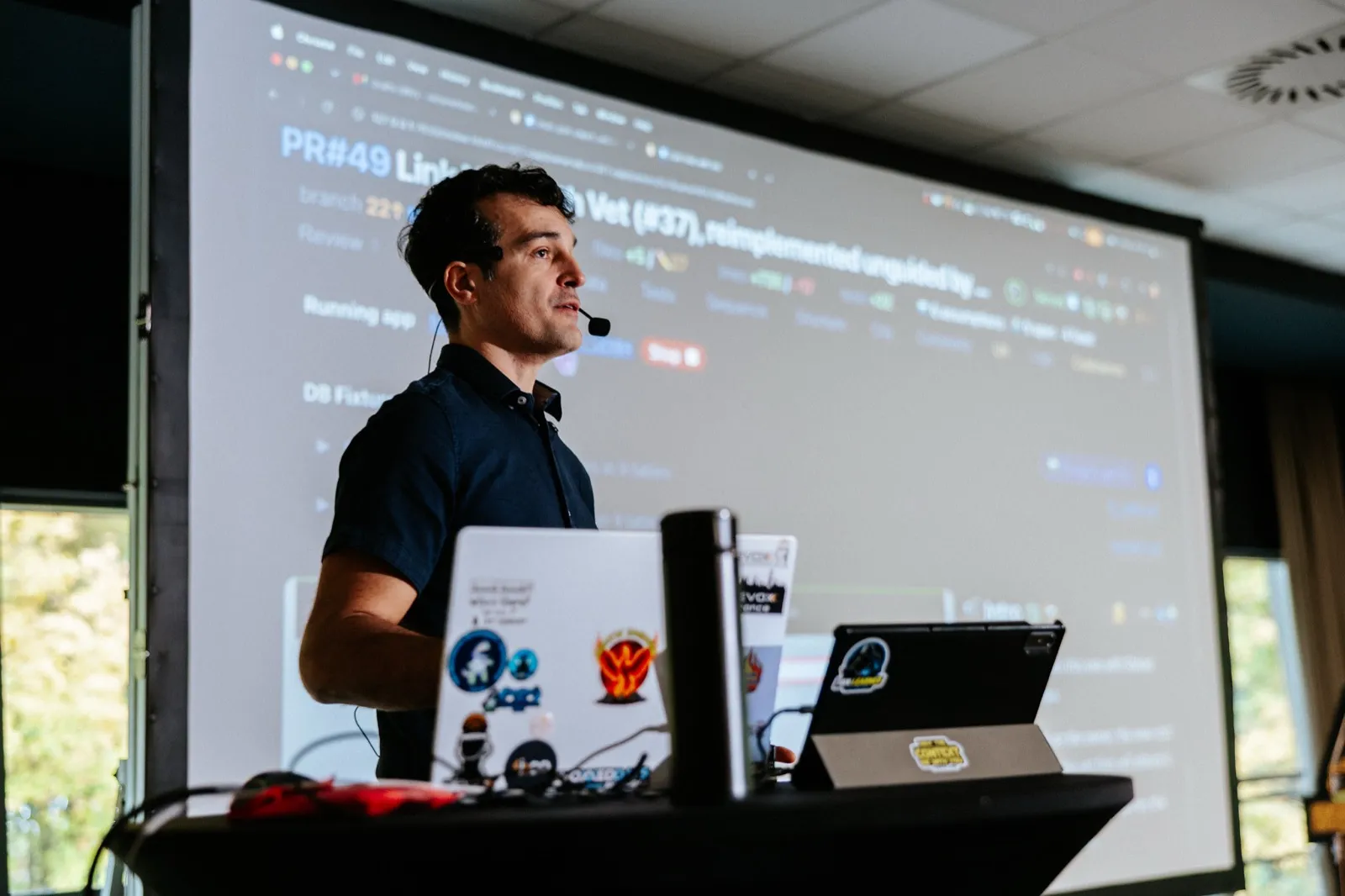 Photo: PROIDEA, JDD 2026 gallery
For me, the best and most interesting talk by far was Victor Rentea’s “Code Review in Agentic Engineering”. It was not only strong on content, showing how to use AI to build a tool for quickly visualising code changes, but above all it was a lively, dynamic show full of visual and sound effects.
As for the content itself, Victor showed how developers today are buried under huge numbers of AI-generated code changes, and how hard it is to review them. He built a tool (victorrentea/human-review) that visualises code changes with dynamic API diagrams (showing added parameters, changed and new endpoints, etc.), data model changes, a view of the surrounding code, the tests and their coverage, code structure, complexity and more. See for yourself: the tool is available online as demo_1 and demo_2.
I liked the tool so much that I’m now working on my own version of a similar SKILL, tailored to my needs. You’ll definitely see the results on the blog, so stay tuned ;)
🥈 The rules archetype enriched with fuzzy logic algebra – Sławomir Sobótka
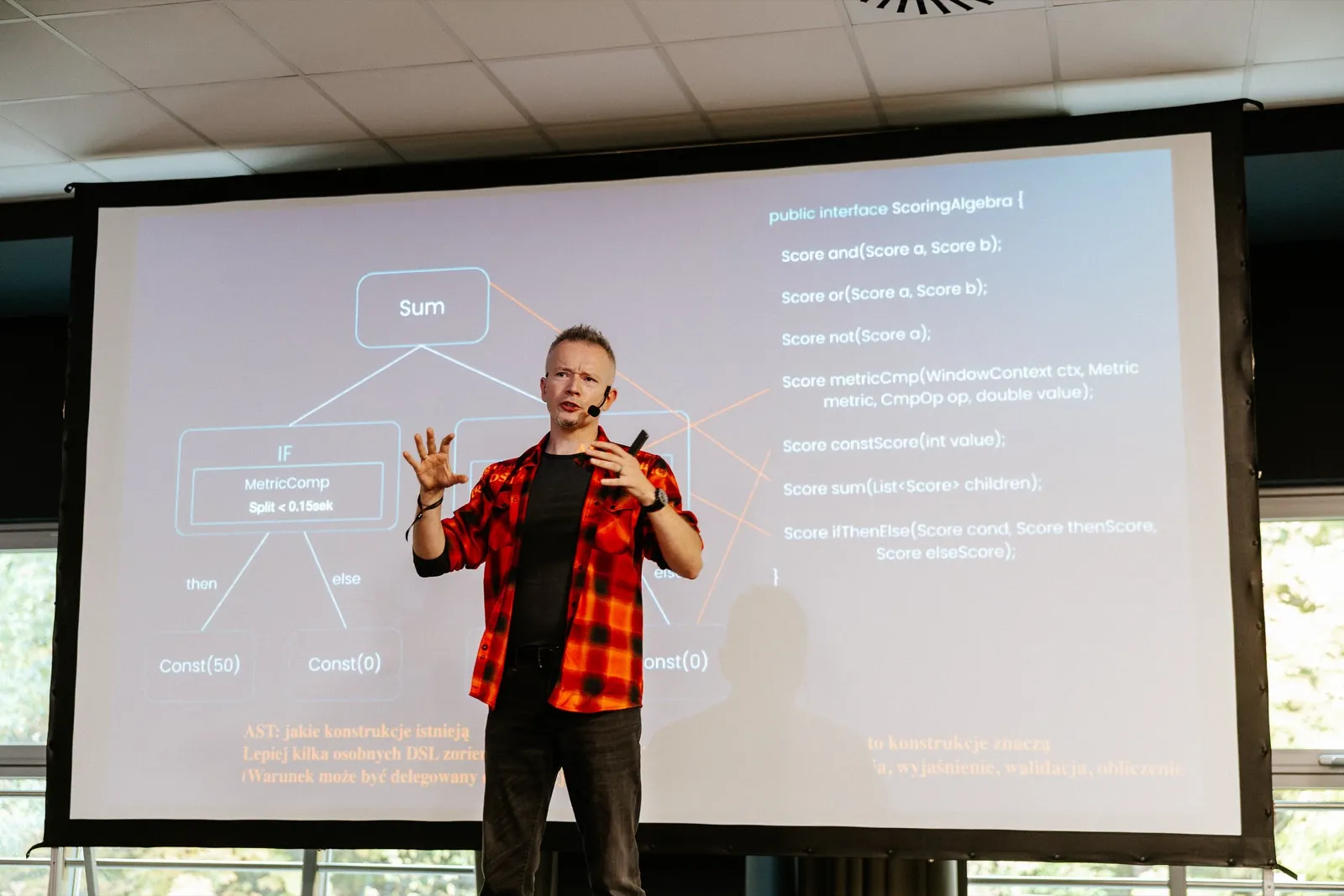 Photo: PROIDEA, JDD 2026 gallery
Sławek is a veteran of the Polish conference scene. I’ve probably watched all of his talks and completed his training courses at DevStyle, yet he still manages to surprise me with his topics and the way he presents them. This time it was the rules archetype, shown through the example of his startup: a system for running shooting ranges visually (yes, you hold a real gun and run along set routes, while the system projects different scenarios and measures your performance and accuracy).
More coffee per head
A little ironically, there is one sad reality I’ve noticed at the conferences I’ve been attending since 2012: every year there are fewer people and fewer exhibitors. There are surely several reasons for this, but JDD shows that in 2026 there is still plenty that’s new and worth talking about, and that when building serious systems for our clients, AI doesn’t solve every problem yet, so our own growth and knowledge still matter enormously.
See you next year!
We came back from Kraków with pages of notes, a new idea for code review and the conviction that a lot is still happening in the JVM world, even if everyone is talking about AI. Java is doing well, and we’re already planning our next trip. If you’re at JDD next year, come and say hi in the hallways!